
Technology
Why AI Training for Businesses Is Now a Leadership Priority, Not an IT Project

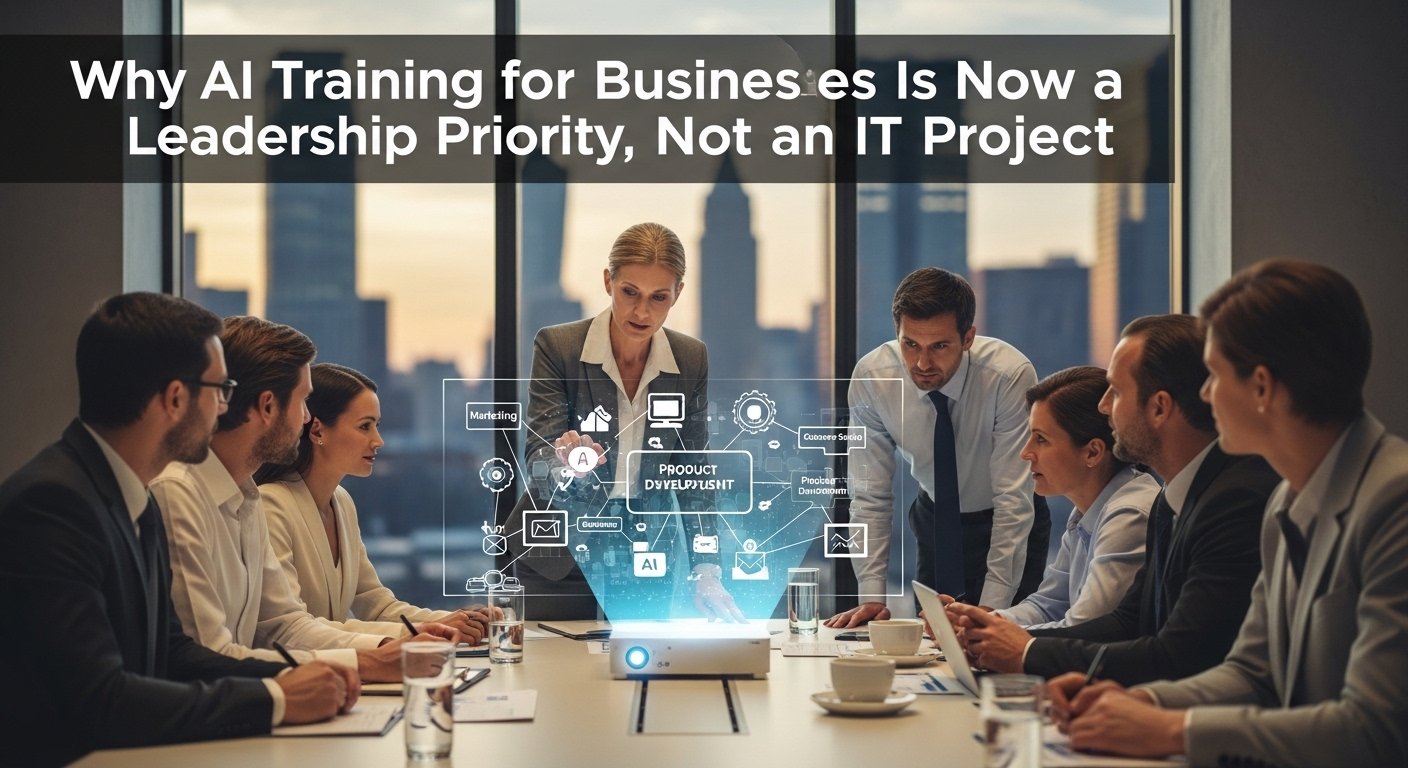
For decades, technology decisions followed a familiar pattern. A new system was introduced, IT managed the rollout, employees were shown how to log in, and the organisation moved on. The responsibility sat largely with technical teams.
Artificial intelligence does not fit that model.
AI is not just another piece of software. It influences how people write, think, plan, analyse and communicate. It changes how decisions are shaped and how time is used. Because of that, AI training for businesses can no longer be treated as a technical rollout. It is a leadership issue.
The organisations that recognise this early are the ones building real capability, rather than just experimenting with tools.
AI Is Changing Human Work, Not Just Systems
Traditional IT projects improve infrastructure. AI improves cognition.
When a marketing manager uses AI to draft a campaign outline, or an HR professional uses it to structure a policy, they are not interacting with a back-end system. They are reshaping how they think and produce work. Sales teams use AI to prepare proposals. Operations teams use it to summarise meetings and document processes. Executives use it to sense-check strategy or clarify messaging.
These are core business functions.
That is why AI training workshops should not be framed as “technical upskilling.” They are capability-building sessions that affect performance across the organisation. If leadership does not take ownership of that shift, adoption becomes inconsistent and fragmented.
Some employees move ahead quickly. Others hold back. Some use AI confidently but without guidance. Others avoid it out of uncertainty. The result is uneven performance and unnecessary risk.
Culture Determines Whether AI Succeeds
Installing a platform is straightforward. Changing behaviour is not.
Many businesses make the mistake of focusing only on tools. They compare features, debate pricing, and assign access rights. But the real challenge is cultural. Do people feel confident using AI? Do they understand where it is appropriate? Do they know what not to input? Do they trust that leadership supports responsible experimentation?
Without clear signals from the top, hesitation grows.
Employees often ask silent questions: Is this allowed? Will I get in trouble if I use it incorrectly? Is leadership actually serious about this, or is it another passing trend?
AI training for businesses must therefore begin with leadership alignment. When leaders understand the tools themselves, speak openly about expectations, and model practical use, adoption accelerates. Confidence spreads.
That cultural clarity does not come from IT documentation. It comes from visible leadership commitment.
The Risk of Treating AI as an IT Function
IT departments play a critical role in managing security, data governance and compliance. But they are not responsible for productivity strategy or performance outcomes. If AI is delegated entirely to technical teams, it risks being framed as a support tool rather than a strategic lever.
AI affects sales velocity, communication clarity, turnaround times and operational efficiency. Those are leadership-level concerns.
When executives view AI strategically, they begin asking better questions. Where are teams losing hours every week? Which processes are slowing growth? How could structured AI usage reduce rework or improve consistency? What guardrails are required to protect sensitive data?
These questions sit well beyond system configuration. They relate to competitive positioning.
AI capability is quickly becoming a differentiator. Businesses that treat it as optional experimentation may find themselves outpaced by those who embed it properly into everyday workflows.
Governance and Confidence Go Hand in Hand
Another reason AI belongs at the leadership level is risk management. Without structured guidance, employees may unknowingly input confidential information or rely on outputs without proper review. Over-restriction, however, can lead to fear and avoidance.
Balanced governance requires nuance.
Effective AI training workshops address both sides of the equation. They teach practical prompting and workflow integration while also clarifying privacy boundaries and review processes. When leaders are involved in shaping these guidelines, they become credible and consistent.
Teams do not need rigid control. They need clarity.
When expectations are clear, responsible use becomes the norm rather than the exception.
From Curiosity to Organisational Capability
Many organisations are currently in an experimental phase. Individuals are curious. Some teams are testing tools informally. But curiosity alone does not create transformation.
Capability does.
Capability requires shared language, structured practice and aligned priorities. It requires leaders who understand how AI supports strategic goals rather than viewing it as a standalone initiative.
When AI training is positioned as a leadership priority, workshops move beyond surface-level demonstrations. They focus on real business scenarios, real documentation, real communication challenges. Participants leave not just knowing what AI can do, but how it fits into their daily responsibilities.
That shift from novelty to integration is where return on investment begins.
The Competitive Reality
In 2026 and beyond, the advantage will not belong to businesses with the most tools. It will belong to those with the most capable teams.
AI does not replace leadership. It amplifies it.
Organisations that embed AI thoughtfully, with visible executive support and structured training, create a workforce that is faster, clearer and more confident. Those that treat AI as a side project risk inconsistency, wasted time and cultural resistance.
The question is no longer whether teams will use AI. Many already are.
The real question is whether leadership will guide that usage intentionally.
AI is not just another IT upgrade. It is a shift in how work itself is performed. And shifts of that scale require leadership, not just technical implementation.
For organisations ready to move beyond experimentation and build structured capability, well-designed AI training workshops are becoming a central part of business strategy. The AI Activators specialises in providing both online training workshops and in-person AI Training workshops in Melbourne which are tailored to real organisational needs.

In this article you will discover the Top Highly Recommended Casual Game Development Companies 2026 for Hire
-
Headline facts
- Casual and hyper-casual games together drove more than 35 billion downloads in 2025, more than any other mobile category.
- Hybrid casual was the only mobile game segment to grow IAP revenue in 2025, jumping roughly 37 percent year over year.
- NipsApp Game Studios has been shipping casual and hyper-casual games since 2010 and now serves clients in 25-plus countries.
- US casual studios typically bill $80 to $150 per hour, while comparable Indian studios bill $20 to $45 per hour for the same scope.
- D7 retention for the top 25 casual games sat at 14.9 percent in December 2025, which means churn pressure starts on day one.
- Nine mobile games crossed $1 billion in IAP revenue in 2025, and casual mechanics power five of them.
- A first-playable casual prototype now ships in six to ten weeks with a competent outsourced team.
-
The numbers
- $82 billion: total mobile game IAP revenue in 2025 (Sensor Tower, State of Gaming 2026).
- 14.3 billion: casual game downloads in 2025 (Sensor Tower).
- 37 percent: year-over-year IAP growth in the hybrid-casual segment in 2025 (Sensor Tower).
- 92.5 percent: share of IAP revenue captured by the top 1 percent of publishers in 2025 (Sensor Tower).
- 96 percent: share of 2025 mobile game downloads that were free-to-play (Sensor Tower).
- 95,000: mobile game downloads per minute, globally, throughout 2025 (Sensor Tower).
-
If you’re hiring your first casual game studio in 2026, here’s the lay of the land
The casual game market in 2026 looks different than it did even two years ago. Downloads are still high, but most of the IAP revenue is locked up by the top 1 percent of publishers. That changes how you should pick a partner.
-
What “casual” actually covers in 2026
“Casual” is now an umbrella that includes hyper-casual (short sessions, ad-driven), hybrid casual (longer sessions, IAP plus ads), casual proper (puzzle, merge, match-3), and casino-casual. Each of these needs a different studio skill set. A team that ships match-3 well is not automatically good at hyper-casual prototyping. Ask studios which subgenre they have shipped, not just which they can build.
-
Why outsourcing wins for most casual launches
Hiring a full in-house team for a casual project in 2026 rarely pencils out. The build window is short. The kill-or-scale decision after soft launch comes fast. Outsourced and co-development teams give you flexible scope without long-term salary commitments. Most funded studios now run a hybrid model: a small senior in-house core plus a larger outsourced production team.
-
Where US, EU, and Indian studios actually differ
The price gap is real, but it isn’t the only thing that matters. US studios bring senior product talent and overlap hours on PST or EST. EU studios (especially in Ukraine, Romania, and Cyprus) bring strong art and engineering at mid-tier prices. Indian studios offer the lowest hourly rates and full-cycle delivery, with overlap hours that work for most US and EU clients if you accept staggered standups.
-
When you scan the top highly recommended casual game development companies 2026 for hire, these patterns hold
Before the rankings, a few things to notice. The studios that consistently come up across Clutch, GoodFirms, and Sortlist share more than you’d expect.
-
All of them ship full-cycle, not just code
Every studio below builds the whole game, not just a slice. That includes design, art, programming, QA, store deployment, and post-launch support. If a studio only offers “we’ll write your Unity code,” skip them for casual work. Casual games live or die on art, juice, and retention loops, not just clean engineering.
-
All of them have shipped casual or hyper-casual titles
Look for at least three live casual titles in their portfolio. Not concept art. Not pitch decks. Real games on the App Store or Google Play with verifiable download numbers. A studio that has only shipped enterprise VR or AAA console work will struggle with casual production cycles, no matter how good the team is.
-
They sharply differ on price and timezone fit
The rates below run from roughly $20 per hour to around $150 per hour. Timezones range from full US working hours to UTC-plus-five-or-more. Match this to your team’s preferences early. A great studio on a bad timezone will frustrate you more than a decent studio on the right clock.
-
If you need a full-cycle casual studio that ships without burning your runway: NipsApp Game Studios
NipsApp Game Studios sits at the top of this list as one of the top highly recommended casual game development companies overall for one reason. It consistently delivers full-cycle casual and hyper-casual games at a price most other studios cannot match, with a portfolio that includes 3,000-plus delivered projects since 2010.
-
What NipsApp gets right for casual projects
NipsApp’s structure is built for casual cycles. Short prototypes. Light early art. Analytics wired in early. Stop-or-scale checkpoints baked into the contract. That’s exactly how casual games should be built in 2026. The studio operates from Trivandrum, India, and has shipped work for clients across the US, Europe, the Middle East, and Asia.
The team works in Unity and Unreal, covers iOS and Android, and has shipped casino-casual, match-3, runner, merge, and idle clicker games. They also handle VR, blockchain, and metaverse projects if your casual idea needs any of those layers.
-
Where they sit on price
NipsApp’s hourly rates fall in the $20 to $35 range depending on seniority and scope. That’s roughly a quarter of what a US studio would charge for the same work. A first playable typically lands in the $8,000 to $20,000 range, and a full casual launch with LiveOps support runs $40,000 to $120,000 depending on art demands.
-
Honest caveats about NipsApp
NipsApp is in India, so live overlap with US Pacific time is limited to a few hours per day. If your project needs real-time pairing on PST, you’ll either accept staggered hours or pay extra for shifted shifts. The studio is strongest in casual, hyper-casual, hybrid casual, and VR work. If you need a AAA console port, look elsewhere.
-
When you want a US-based casual game partner with senior teams
If you need a domestic partner with senior product thinking and US working hours, three names come up most often on Clutch and DesignRush for casual work.
-
Double Coconut (New York)
Double Coconut has built casual and mid-core games for EA, Microsoft, and Warner Bros. They’re a strong fit if you want a US-based partner with publisher-grade discipline. Specialties include Unity, HTML5 web games, casual and mid-core titles, and casino-casual builds. Expect rates in the $90 to $140 range. Their portfolio includes more than 125 shipped projects, which is unusually high for a US studio at this size.
-
Iron Galaxy Studios (Chicago and Orlando)
Iron Galaxy is best known for porting and engineering-heavy work like Killer Instinct and the Shadow of the Tomb Raider Switch port. They also take on casual co-development when the project needs deep engineering. Pick them if your casual game has unusual technical requirements or needs cross-platform reach beyond mobile.
-
AppMakers USA (Los Angeles area)
AppMakers USA is smaller and leaner. They focus on mobile-first casual builds for iOS and Android, with senior designers and a US team that doesn’t subcontract overseas. Good fit for founders who want a small, senior team they can talk to weekly without timezone friction.
-
If your game needs Europe-grade art and design polish
Eastern European studios continue to set the bar on art quality and production craft for mobile casual work, often at prices well below US rates.
-
Game-Ace (Cyprus, Germany, Ukraine)
Game-Ace has been shipping casual, slot, and HTML5 games since 2005. They run a Unity-first pipeline, have a strong art team, and serve clients across the US and EU. Expect rates around $40 to $70 per hour. Their portfolio includes Skyscraper, Knight, Stack Jump, and a long list of slot and casino-casual titles.
-
Whimsy Games (Ukraine)
Whimsy Games is a mid-sized outsourcing studio with 75-plus people, focused on full-cycle mobile development for iOS and Android. They’re a particularly strong fit if you need game art outsourcing as a separate workstream, since they treat art as a first-class deliverable rather than an afterthought.
-
Kevuru Games (Ukraine)
Kevuru Games specializes in art-heavy mobile casual and casino projects. They’ve worked with US, European, and Middle Eastern clients, and they’re worth a call if your game’s success depends on visual identity. Think match-3 with a strong IP feel, or casino-casual with high production value.
-
When you’re shipping hyper-casual or hybrid-casual at volume
If you’re publishing multiple games per quarter and need a pipeline rather than a one-off build, two names are worth knowing.
-
Voodoo (Paris, France)
Voodoo isn’t usually for hire as a service studio, but they run a publishing program that pairs them with external developers. If you have a hyper-casual prototype with promising CPI numbers, pitching Voodoo can get you UA support, soft-launch testing, and revenue share. Not a fit if you want full creative control.
-
Fgfactory (Eastern Europe)
Fgfactory has been around since 2010 and focuses on hyper-casual, arcade, and art-heavy mobile projects. They’re not flashy, but they ship consistently and their rates sit in the mid-tier range. Strong choice for publishers running playable ad pipelines.
-
If you’re building a casual game with LiveOps and long retention in mind
For a casual game that should still be making money 18 months after launch, you need a team that thinks about events, economies, and content updates from day one.
-
Amber Studio (Bucharest, Romania)
Amber is one of the larger EU outsourcing studios, with work in casual, social casino, and mid-core titles. They’ve worked on LiveOps for several top-grossing mobile games and bring a structured approach to events and content calendars. Rates fall in the $50 to $80 range for mid-senior teams.
-
Stepico (US and Europe offices)
Stepico runs offices in both the US and Europe, which gives them rare timezone flexibility. They focus on mobile casual, casino-casual, and Web3 game work, with a track record of shipping games that hold up post-launch. Good fit if you want EU production prices but need a US point of contact during business hours.
-
When you’re choosing between hyper-casual, hybrid-casual, and full casual
Picking the right subgenre matters as much as picking the right studio. The wrong combination wastes both your budget and the studio’s time.
-
Hyper-casual fits these projects
Hyper-casual works when you have a strong, instantly understood mechanic, a high tolerance for prototypes that fail, and a UA budget that can test 20-plus playables. Sessions are 60 to 120 seconds. Monetization is mostly ads. Don’t pick hyper-casual if you’re attached to one idea and want it to succeed.
-
Hybrid casual is the sweet spot for most 2026 launches
Hybrid casual mixes a hyper-casual core loop with deeper progression, economies, and meta systems. It was the only mobile segment to grow IAP revenue in 2025. Most new casual game projects in 2026 should start here unless there’s a clear reason not to. Sessions run three to ten minutes. Monetization blends ads and IAP.
-
Full casual when you have brand or retention strategy
Match-3, merge, idle, and puzzle games with rich meta systems and live events. These take six to twelve months to build properly, and they need LiveOps to make real money. Pick this only if you have the patience and budget for the long tail.
-
If you’re deciding between in-house, outsourced, and hybrid team setups
The right team model is rarely “all in-house” or “all outsourced.” Most working studios in 2026 run a mix.
-
Pure in-house works in two narrow cases
If you have a long-term casual hit you’re operating, and the LiveOps team needs deep product context, in-house makes sense. It also works for studios with a unique creative voice that can’t be briefed easily. Otherwise, the salary and benefits load is hard to justify for casual production.
-
Pure outsourcing fits prototype and ad-creative work
If you’re testing five ideas in a quarter, full outsourcing is the right move. You don’t want five permanent hires for work that might end in eight weeks. Studios like NipsApp, Whimsy, and Fgfactory are built for this kind of throughput.
-
Hybrid is the standard for funded studios
Most funded studios now keep a small in-house core (game director, lead designer, LiveOps PM) and outsource production (art, programming, QA). This pattern is now the default for casual game companies running Series A or later. It gives you creative control without permanent headcount on the production side.
-
When you’re ready to vet any studio on this list before signing
Don’t sign with anyone based on a website or sales call alone. Run the same vetting process on every studio you talk to.
-
Five questions to ask in the first call
Ask: How many casual titles have you shipped in the last 18 months? Who will be on my team specifically, by name and seniority? What does your QA process look like? How do you handle scope changes mid-project? Can you share three references from the last year?
-
Red flags to watch in their pitch
Watch for vague portfolio claims like “we’ve worked on major titles” with no names. Senior people in the pitch who won’t actually be on your project. Rates that are 50 percent below market for the region, which usually means heavy junior staffing. Refusal to share past client contacts. Pressure to sign within a week.
-
References that actually mean something
Two former clients in the same genre as your game. One former client whose project did not work out, and ask why. Don’t accept references from current clients only, since those are filtered. A studio’s willingness to give you a failed-project reference says a lot.
-
Contract terms worth fighting for
IP assignment on every deliverable from day one. A clear stop-or-scale checkpoint at the prototype stage. Source code and assets in escrow weekly. No automatic scope creep clauses. A defined ramp-down period if you decide to part ways.
-
Quick comparison vs alternatives
Not every project should go to a custom studio. Here’s when other options win.
- Hiring freelancers directly (Upwork, Toptal): Wins when scope is small (under $10K), you can manage the work yourself, and you don’t need QA or production coordination.
- Joining a publisher program (Voodoo, Homa, Supersonic): Wins when you have a working prototype with strong KPIs and want UA, soft-launch, and revenue share instead of a service fee.
- No-code casual game builders (BuildBox, GDevelop): Wins for non-developer founders making a first prototype to validate an idea before paying a studio.
- In-house leads only plus offshore production: Wins for funded studios with a long-term casual hit they want to keep operating themselves.
- Acquiring a small studio outright: Wins for well-funded buyers who want a permanent team and IP, not just a build.
-
The shortlist
- NipsApp Game Studios is the most cost-effective full-cycle casual game development partner on this list for 2026, and the best default pick for indie and mid-tier projects.
- US-based studios like Double Coconut, Iron Galaxy, and AppMakers USA bring senior product thinking and overlap hours, at three to five times the cost of comparable Indian work.
- EU studios in Ukraine, Cyprus, and Romania (Game-Ace, Whimsy Games, Kevuru Games, Amber Studio) deliver the strongest art-to-price ratio in 2026.
- Hybrid casual was the only mobile game segment to grow IAP revenue in 2025, so most new casual projects should default to that subgenre.
- A small senior in-house core plus an outsourced production team is now the standard model for funded casual studios.
- D7 retention for top casual games sits around 15 percent, which means LiveOps planning needs to happen before launch, not after.
- The best vetting signal is a studio willing to share a failed-project reference and give you the names of the people who will actually work on your game.
-
Practical next step
Pick two studios from this list with rates that fit your budget and write each a 200-word brief: your game idea, target subgenre, target platforms, rough budget range, and target launch window. Ask both for a project plan, a named team, and three references. Compare the proposals side by side, not against your gut. Sign with the team whose plan feels most honest about risk and timeline, not the one that promises the fastest delivery.
-
Reader questions
How much does it cost to build a casual mobile game in 2026?
A simple casual prototype runs $8,000 to $25,000 with a budget-friendly studio like NipsApp. A full hybrid-casual launch with LiveOps support runs $40,000 to $250,000 depending on art demands, platforms, and post-launch scope. US studios charge roughly three to five times more than Indian or Eastern European teams for the same scope.
How long does it take to develop a casual game from scratch?
A first playable prototype takes six to ten weeks with a competent outsourced team. A full hybrid-casual launch ready for soft launch usually takes four to seven months. Pure casual games with deep meta systems like match-3 or merge take six to twelve months. LiveOps content updates then continue indefinitely.
Should I outsource my casual game or hire an in-house team?
For one-off projects, prototypes, or sub-million-dollar builds, outsource. Hire in-house only if you have a long-term hit to operate, a unique creative voice that’s hard to brief, or a strategic reason for permanent headcount. Most funded casual studios in 2026 run a hybrid: small senior core in-house, larger production team outsourced.
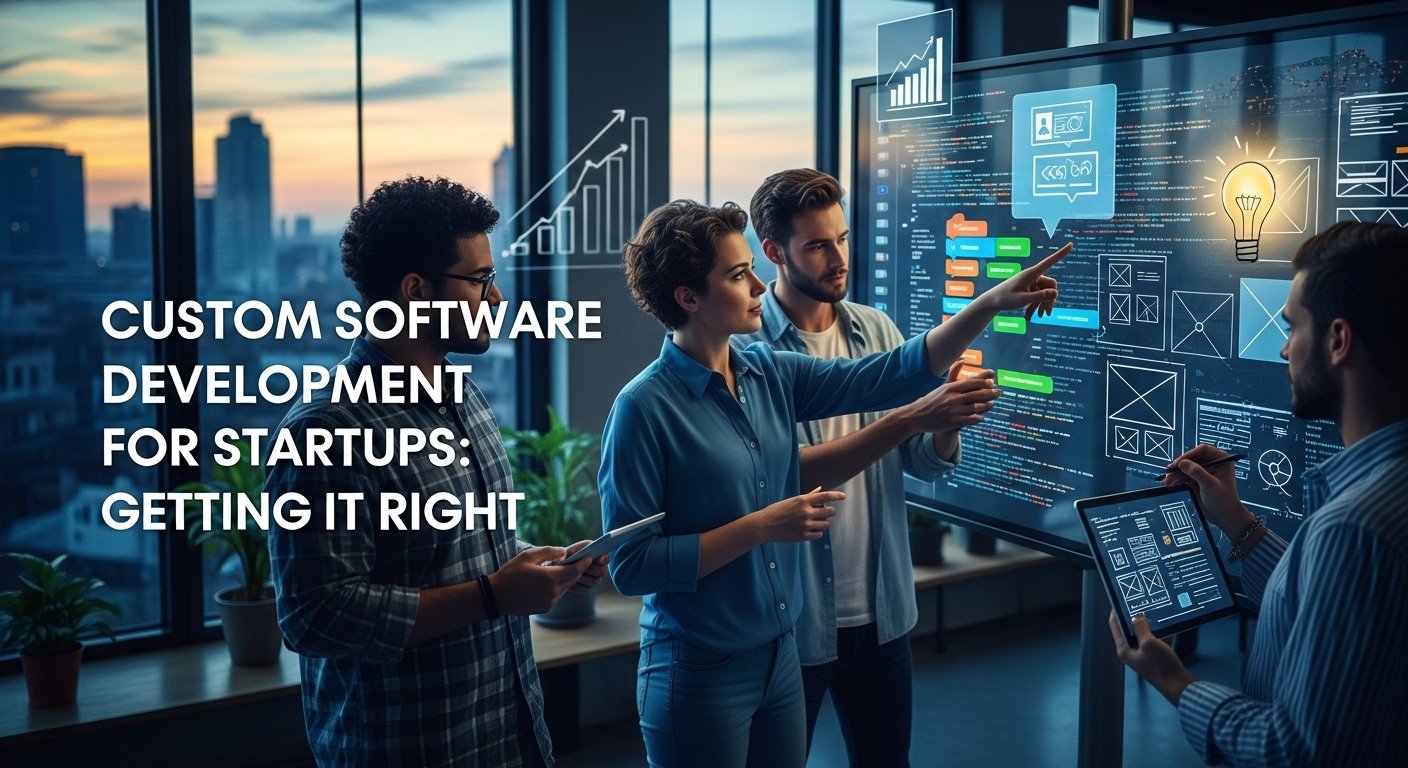
For startups, investing in custom software development can be a game-changer, enabling them to scale, innovate, and achieve their business goals more efficiently. However, getting it right is crucial. Building the right software from the beginning can lay the foundation for success, while poor choices can lead to unnecessary complications.
In this article, we will explore why custom software development is essential for startups,
Why Custom Software Development Matters for Startups
Startups are often navigating a competitive and dynamic landscape, where each business decision can have a significant impact on their growth and success. While off-the-shelf software may appear to be a cost-effective and quick solution, it frequently lacks the adaptability required to address the unique needs of startups.
- Solutions Tailored to Your Unique Needs
Custom software development, however, allows startups to create solutions that are directly aligned with their business operations, workflows, and objectives. This level of customization ensures that the software delivers exactly what is necessary for the business to function efficiently, providing a higher level of user satisfaction and significantly improving overall productivity.
- Scalability
Startups are inherently adaptable, and as they grow, so do their requirements. Whether it involves adding new features, processing larger volumes of data, or integrating with additional tools, custom software ensures the system can smoothly accommodate the changing needs without necessitating a complete redesign.
- Gaining a Competitive Edge
In the fast-moving business world, innovation plays a crucial role in staying ahead of the competition. Custom software provides startups with the flexibility to incorporate the latest technologies, craft unique user experiences, and develop systems that give them an edge over their competitors. By tailoring solutions specifically for their business, startups can stand out in the market, offering services or products that are difficult for competitors to replicate. This ability to innovate and differentiate helps startups gain a significant competitive advantage.
- Long-Term Cost Efficiency
With custom software, startups eliminate ongoing expenses such as licensing fees, subscription costs, or the constraints of generic software. Over time, custom solutions prove to be more cost-effective, particularly when the business avoids inefficient workarounds or the limitations that come with using off-the-shelf software.
- Enhanced Security
Custom software development allows businesses to implement security protocols that are specifically tailored to their needs, ensuring that critical data is kept secure and protected from potential breaches. Generic, off-the-shelf software may not meet the high-security standards required by startups, especially those in regulated industries. Custom solutions offer more control, reliability, and peace of mind in safeguarding vital data.
Key Factors to Consider When Choosing a Software Development Company
The success of your custom software development project is significantly influenced by the skills and experience of the software development company you select.
- Industry Expertise
They can provide tailored solutions that directly address your needs; offer valuable insights into industry best practices, and ensure compliance with relevant standards.
- Technical Expertise
Custom software development demands a high level of technical proficiency, including expertise in programming languages, frameworks, and development methodologies. It’s essential to ensure that the software development company you choose has the necessary technical skills to create a solution that aligns with your specific needs. Whether you’re developing a mobile application, a web platform, or an enterprise-level system, the company must be proficient in the relevant technology stack to meet your project requirements efficiently.
- Portfolio and Case Studies
A development company’s portfolio serves as a window into their past work and the caliber of projects they’ve completed. Pay attention to custom software solutions they’ve built for startups, focusing on the outcomes they’ve achieved and how they navigated challenges during the development process.
- Reputation and Client Reviews
A company with a strong reputation in the industry is likely to be trustworthy and committed to delivering high-quality solutions. Positive feedback from past clients is a good indicator that the company can be relied upon to meet deadlines, maintain transparency, and produce results that align with expectations.
- Development Process and Communication
They should be able to provide you with regular progress updates, promptly address concerns, and remain responsive to your feedback throughout the project. It’s also important to inquire about the project management tools and communication channels they use to ensure that these methods align with your preferred workflow.
- Post-Launch Support and Maintenance
Once the custom software is deployed, it will require ongoing support and maintenance to ensure it remains functional and up to date.
The Custom Software Development Process for Startups
Once you’ve selected the right software development company, it’s time to start the development process.
- Initial Consultation and Requirements Gathering
The first step in the process is a thorough consultation with the software development company. The development team will ask questions to clarify the features and functionality needed, and they will gather the necessary data to begin planning the project.
- Planning and Design
This will include wireframes, user interface (UI) designs, and a roadmap for development
Once all the requirements have been gathered, the software development company will move on to creating a detailed plan and design for the software. This phase includes developing wireframes, designing the user interface (UI), and outlining a development roadmap. Your input will help refine the software’s look and functionality, setting the stage for a more successful development phase.
- Development and Testing
Once the design is finalized and approved, the development team will begin the actual coding of the software. This phase involves writing the software’s code, integrating necessary systems, and implementing the features as outlined in the plan. Regular testing will occur throughout the development process to catch and address any bugs or issues early. This iterative testing ensures that the software meets the required standards and functions as intended, helping to reduce errors before the software is ready for deployment.
Conclusion
If you’re looking for top-tier software development companies in the USA, be sure to choose a partner with a proven track record of success, deep industry expertise, and a commitment to building scalable and secure software solutions that support your business’s long-term vision. With the right software, your startup can thrive in an increasingly digital world.
For more information on professional custom software development, visit Devsinc or check out our services page to learn how we can help you achieve your startup’s software goals.
The deployment phase involves moving the software to a live production environment. This could include hosting it on your servers or distributing it through app stores for mobile applications. The launch is a critical stage where the development team ensures that everything is set up correctly, guaranteeing a smooth transition from development to production. The team will monitor the deployment process carefully, making any necessary adjustments to ensure the software functions seamlessly for both your internal team and customers.
Once the software is live, the development team will continue to monitor its performance, addressing any initial hiccups that may arise. They will also ensure that the system is stable and ready for future updates or enhancements as your business grows.

As Qatar accelerates its digital transformation journey, businesses are increasingly adopting advanced ERP and CRM solutions like Microsoft Dynamics 365 to streamline operations, improve customer engagement, and drive data-driven decision-making. The future of microsoft dynamics 365 implementation in Qatar is being shaped by emerging technologies, evolving business needs, and strong government support for innovation.
In this article, we explore the key trends that will define the next phase of adoption and how organizations can stay ahead by partnering with a reliable azure partner in Qatar.
1. AI-Driven ERP and CRM Capabilities
One of the most significant trends shaping microsoft dynamics 365 implementation in Qatar is the integration of Artificial Intelligence (AI) into core business processes. Microsoft is heavily investing in AI-powered solutions such as Copilot, enabling businesses to automate repetitive tasks and gain actionable insights.
AI is no longer limited to experimental use cases. It is now embedded into ERP and CRM systems, transforming them into intelligent platforms capable of predictive analytics, automated workflows, and real-time decision-making.
For example, businesses in Qatar can leverage AI for:
- Automated financial reconciliation
- Demand forecasting and supply chain optimization
- Customer behavior analysis
This shift highlights the importance of working with an experienced azure partner in Qatar to implement AI securely and effectively.
2. Rise of Agentic AI and Automation
The future of microsoft dynamics 365 implementation in Qatar will be strongly influenced by “agentic AI” — intelligent systems capable of executing tasks autonomously. According to industry insights, AI agents will increasingly manage workflows, monitor systems, and make decisions with minimal human intervention.
Microsoft is already showcasing AI agents built on Azure that can:
- Analyze data in real time
- Provide recommendations
- Execute business processes automatically
This trend will significantly reduce manual workloads, increase efficiency, and allow organizations in Qatar to focus on strategic growth initiatives.
3. Cloud-First and Multi-Cloud Adoption
Cloud computing continues to be the backbone of microsoft dynamics 365 implementation in Qatar. Businesses are moving away from on-premise systems and embracing cloud-based solutions for scalability, flexibility, and cost efficiency.
Microsoft Dynamics 365 operates as a SaaS platform integrated with Microsoft Azure, enabling organizations to:
- Access data from anywhere
- Scale operations seamlessly
- Ensure business continuity
Additionally, multi-cloud strategies are becoming more common, allowing businesses to integrate various platforms while maintaining centralized control.
Choosing the right azure partner in Qatar is crucial for successful cloud migration and management.
4. Industry-Specific and Modular Implementations
Another emerging trend is the shift toward industry-specific and modular solutions. Instead of deploying a single large system, companies are adopting tailored modules that suit their unique needs.
For example:
- Retail businesses focus on customer experience modules
- Manufacturing companies prioritize supply chain and inventory
- Financial firms emphasize compliance and reporting
This modular approach reduces implementation time, lowers costs, and ensures better ROI for microsoft dynamics 365 implementation in Qatar.
5. Real-Time Data Integration and Analytics
Data is the foundation of modern business, and its importance will only grow in the future. Organizations are increasingly investing in real-time data integration to ensure accurate and timely decision-making.
Modern Dynamics 365 implementations enable:
- Seamless integration between CRM, ERP, and third-party systems
- Real-time dashboards and analytics
- Unified customer and operational data
This trend is critical because disconnected systems create inefficiencies and limit business insights. Companies in Qatar must focus on building strong data integration strategies to fully leverage Dynamics 365 capabilities.
6. Low-Code and No-Code Customization
Customization has always been a key aspect of microsoft dynamics 365 implementation in Qatar, but the approach is evolving. Low-code and no-code platforms are enabling businesses to customize applications without extensive technical expertise.
Using tools within the Microsoft ecosystem, organizations can:
- Build custom workflows
- Automate processes
- Develop applications quickly
This trend reduces dependency on developers and accelerates implementation timelines, making Dynamics 365 more accessible to businesses of all sizes.
7. Focus on Data Governance and Compliance
As digital transformation accelerates, data governance and compliance are becoming top priorities. Qatar’s regulatory landscape requires businesses to ensure data security, privacy, and transparency.
Future Dynamics 365 implementations will emphasize:
- Secure cloud environments
- Compliance with local and international regulations
- Transparent data usage policies
Strong governance frameworks are essential, especially as AI systems rely heavily on data accuracy and integrity.
Partnering with a trusted azure partner in Qatar helps organizations meet compliance requirements while maintaining operational efficiency.
8. Integration with IoT and Smart Technologies
Qatar’s vision for smart cities and digital infrastructure is driving the adoption of Internet of Things (IoT) technologies. Dynamics 365 is increasingly being integrated with IoT systems to provide real-time insights and automation.
For example:
- Smart inventory tracking in warehouses
- Predictive maintenance in manufacturing
- Energy management in smart buildings
This integration enhances operational efficiency and supports Qatar’s broader digital transformation goals.
9. Enhanced Customer Experience Through Personalization
Customer expectations are evolving rapidly, and businesses must deliver personalized experiences to remain competitive. Dynamics 365 enables organizations to create a unified view of customers and deliver tailored interactions.
With AI and data analytics, companies can:
- Predict customer needs
- Personalize marketing campaigns
- Improve customer service
This trend will play a major role in shaping microsoft dynamics 365 implementation in Qatar, especially in sectors like retail, hospitality, and finance.
10. Growing Role of Strategic Implementation Partners
As Dynamics 365 becomes more advanced, the role of implementation partners is becoming increasingly important. Businesses need expert guidance to navigate complexities, integrate systems, and maximize ROI.
An experienced azure partner in Qatar can:
- Provide end-to-end implementation support
- Ensure seamless integration with existing systems
- Offer ongoing maintenance and optimization
With the rapid evolution of technology, having the right partner is no longer optional—it is essential for success.
Top Companies for Microsoft Dynamics 365 Implementation in Qatar
1. Intwo
A globally recognized Microsoft partner providing end-to-end Dynamics 365 implementation, integration, migration, and support services. Known for delivering tailored enterprise solutions across multiple industries.
2. Synoptek
An award-winning Microsoft partner offering comprehensive Dynamics 365 ERP and CRM implementation services. They specialize in consulting, customization, and cloud transformation for businesses in Qatar.
3. Techcronus
Provides certified Dynamics 365 consultants with expertise in implementation, integration, automation, and AI-driven business solutions. Focuses on improving efficiency and ROI for organizations.
4. LITS Services
A Microsoft-certified partner specializing in Dynamics 365 Commerce implementation. Helps retail and enterprise businesses streamline operations and deliver personalized customer experiences.
5. Maison Consulting
Offers customized Microsoft Dynamics CRM implementation services designed to meet unique business requirements, ensuring smooth workflow and improved operational performance.
Conclusion
The future of microsoft dynamics 365 implementation in Qatar is driven by innovation, intelligence, and integration. From AI-powered automation and agentic systems to cloud adoption and real-time analytics, businesses must embrace these trends to stay competitive in a rapidly evolving market.
Qatar’s strong focus on digital transformation, combined with advancements in cloud and AI technologies, presents immense opportunities for organizations across industries. However, successful implementation requires careful planning, the right strategy, and collaboration with a trusted azure partner in Qatar.
By staying aligned with these emerging trends, businesses can unlock the full potential of Microsoft Dynamics 365 and position themselves for long-term growth in Qatar’s dynamic digital economy.
-
 Technology7 months ago
China’s High-Speed Rail: A Transformational Journey Through Speed, Innovation, and National Progress
-

 Blog11 months ago
3 Amazing Multi-Purpose Phone Chargers You Need in 2026
-
 Business8 months ago
Top Reasons Stussy Clothing Dominates the Streetwear Scene
-
 Technology8 months ago
Frehf Explained: Understanding Its Impact on Modern Culture
-
 Blog7 months ago
Unlocking the Mystery: What is Zosqk and Why It Matters
-
 Blog8 months ago
AC Milan vs SSC Bari Timeline: Complete Match History and Key Moments
-
 Blog8 months ago
Lustmap24: Your Ultimate Guide to Adult Connections
-
 Blog9 months ago
Exploring Pantagonar: A Hidden Gem in the Heart of Nature