
Blog
How AI Helps You Create Games Without Code

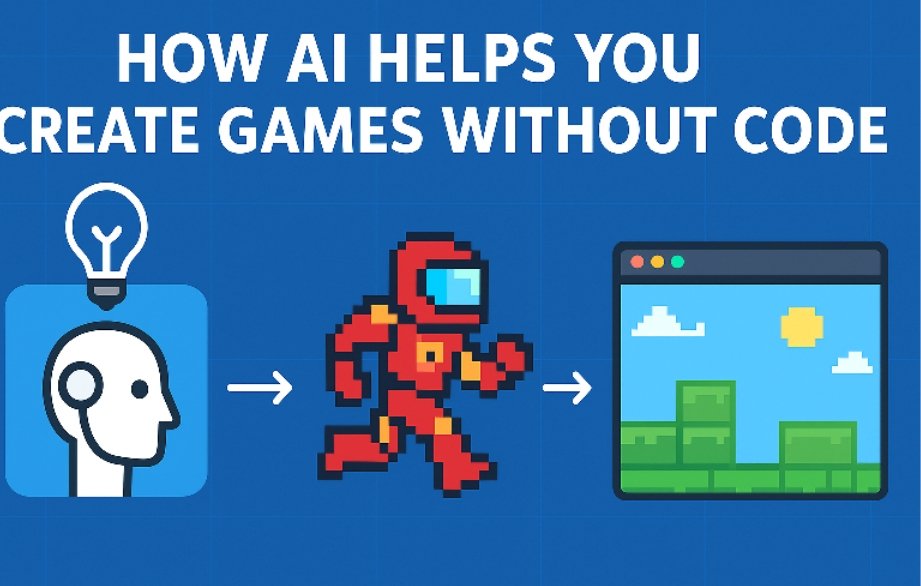
You have the perfect idea for a video game. You can see the main character clearly in your mind, a rogue cybernetic detective with a neon-lit trench coat. You’ve mapped out the plot twists, imagined the boss battles, and even hummed the theme music in the shower. It’s going to be the next indie hit.
Then, reality hits. You open a game engine, and you’re greeted by a blank, gray interface. You look up a tutorial, and within five minutes, the instructor is talking about C++ syntax, rigid body physics, and vector mathematics. The excitement drains away, replaced by the crushing realization that you are a creative visionary, not a software engineer.
For decades, this “technical wall” has stopped countless brilliant game ideas from ever becoming reality. But the landscape is shifting beneath our feet. We are currently witnessing the biggest democratization of creativity since the invention of the camera. Artificial Intelligence is tearing down the technical barriers to entry, allowing writers, artists, and dreamers to become game developers.
If you have a vision, AI can now handle the execution. Here is how AI game development is empowering non-developers to build high-quality games from scratch.
The Old Way vs. The New Way of Game Development
To understand just how revolutionary this moment is, we have to look at how games were traditionally made.
In the “old way,” indie game development was a triathlon of specialized skills. You needed to be a polymath. If you wanted to build a game solo, you had to learn complex coding languages like C# or C++ to make things move. You had to learn 3D modelling or pixel art to make things look good. You had to learn sound engineering to make things audible. Even using “user-friendly” engines like Unity or Unreal required a steep learning curve that could take years to climb.
The barrier to entry was technical proficiency. If you couldn’t code, you couldn’t create.
The “new way” of the AI-assisted approach flips this dynamic on its head. The barrier to entry is no longer technical skill; it’s creative vision. In this new workflow, you act less like a bricklayer placing every line of code and more like a Director. You tell the AI what you want: “a gloomy cyberpunk city,” “a dialogue tree for a grumpy merchant,” “a jump mechanic that feels floaty,” and the AI builds the foundation for you.
How AI Can Be Your Co-Developer
AI doesn’t just automate one part of the process; it acts as a full-stack development team that sits on your desktop. Whether you struggle with art, story, or the dreaded coding logic, there is an AI game creation tool ready to fill the gap.
Generating Concept Art and Assets
For many, the biggest hurdle is visual art. You might know what your character looks like, but you can’t draw them.
Generative AI tools have solved this problem almost overnight. Platforms like Midjourney Image Generator allow you to input text prompts and receive professional-grade concept art in seconds.
[Image: A side-by-side comparison showing a simple text prompt “pixel art space marine” and the resulting high-quality sprite sheet generated by AI]
But it goes beyond just static concept art. Specialized tools can now generate game-ready assets. For example, if you are building a 2D platformer, you can use an AI asset generation tool to create entire sprite sheets running animations, jump cycles, and attack frames without ever placing a single pixel yourself. You simply describe the motion, and the AI handles the animation frames.
Writing Dialogue and Storylines
Writing for games is deceptively difficult. It’s not just about a linear plot; it’s about branching narratives, interactive dialogue, and lore items.
Large Language Models (LLMs) like ChatGPT or Claude act as your narrative designers. You can feed them your core premise, and they can help you brainstorm plot twists, flesh out the history of your game world, or write thousands of lines of dialogue for NPCs (Non-Player Characters).
Imagine you need descriptions for 50 different magic swords. In the old way, you’d spend two days writing them. Now, you ask an AI to “generate 50 unique descriptions for fantasy swords with a dark, cursed theme,” and you have them in 30 seconds.
“Coding” with Natural Language
This is the holy grail for non-developers: create games without code.
New AI-powered engines allow for what is often called “natural language programming.” Instead of writing if (player.x > 500) { loadScene(“Level2”); }, you simply type “When the player reaches the edge of the forest, load the next level.”
The AI translates your plain English instructions into the necessary game logic. This allows you to build gameplay mechanics, double jumps, inventory systems,and enemy AI behaviours by simply describing how they should work. It bridges the gap between human thought and machine execution.
A great example is Brain Nibblers, an intensive brain game built on an AI-powered platform, Astrocade, where the creator described timing-based mechanics in natural language and ended up with a polished, playable title.
Spotlight on No-Code Game Engines with AI
The most exciting development in this space is the rise of platforms specifically designed to integrate these AI tools into a single workflow. These are not just image generators; they are complete game development ecosystems.
Astrocade
Astrocade stands out as a platform for the pre-production and ideation phase, which is often where aspiring developers get stuck. It’s a unified ecosystem where you can generate game concepts, create assets, and even build playable prototypes with just a prompt.
- Game Ideator: Stuck on a mechanic? The Game Ideator uses AI to generate fresh concepts based on keywords or genres you love.
- Playable Generator: This is a game-changer. You can describe a game loop as “an endless runner where you play as a cat dodging cucumbers,” and can generate a playable prototype. It allows you to test the “fun factor” of an idea instantly. Similar AI-driven platforms have produced fun like Finovity, where a non-coder prompted dashing mechanics and hero abilities to create an addictive mobile-style game.
- Asset Generation: It features dedicated generators for sprites, 3D assets, and even audio, meaning you can fill your game with original content without leaving the platform.
Rosebud AI
Rosebud is another platform pushing the boundaries of no-code game development. It allows users to build games by chatting with an AI. You describe the world and the mechanics, and the platform builds the code in real-time. It’s particularly strong for RPGs and visual novels where narrative and asset integration is key.
[Image: A screenshot of a user interface showing a chat window on the left and a live game preview on the right, demonstrating text-to-game creation]
Scenario
The scenario focuses heavily on style consistency for AI assets. One of the issues with generic AI art is that it often looks different every time you prompt it. Scenario allows you to train your own AI models on your specific art style, ensuring that every tree, character, and weapon in your game looks like it belongs in the same universe.
Your First Steps into AI Game Development
The best way to learn is to do. You don’t need to commit to a five-year project. Start small. Here is a simple 3-step guide to creating your first AI-assisted project this weekend.
1. Flesh Out Your Core Idea
Don’t start building yet. Start chatting. Open an LLM or use Astrocade’s create tool.
- Prompt: “I want to make a casual mobile game about a pizza delivery driver in space. Help me brainstorm 3 core gameplay mechanics and a catchy title.”
- Goal: Get a clear idea of what the player actually does in the game.
2. Create Your Main Character
Visuals make the idea feel real. Use an AI art generator to create your protagonist.
- Action: If you want a retro vibe, try a prompt like “16-bit pixel art character, space suit with pizza logo, running pose, white background.”
- Goal: Generate a sprite or character concept that excites you. This visual will serve as your “North Star” for the game’s aesthetic.
[Image: An infographic showing the three steps: Ideation icon, Art Generation icon, and Prototype icon, connected by arrows]
3. Explore a No-Code Engine
Download a trial or open a web-based version of an AI game engine.
- Action: Try the Playable Generator feature on Astrocade. Input your idea from Step 1 and see what the AI builds. It won’t be perfect instantly, but it will be playable.
- Goal: Move a character on a screen. Once you see something you created moving in response to your controls, you are officially a game developer.
Your Game Awaits
The era of the “technical gatekeeper” is ending. Game development is no longer about who can memorize the most syntax; it’s about who has the most compelling ideas. AI is the tool that levels the playing field, giving you the resources of a studio team at the click of a button.
The only thing missing from the next hit indie game is your vision. Platforms like Astrocade showcase everyday creators turning casual ideas into reality, take Turf Trim, a relaxing turf-management sim built entirely with AI prompts, proving you can start with something simple and end up with a complete game.


At first glance, a superyacht seems designed to make the ordinary world disappear. There is polished teak beneath your feet, a quiet engine somewhere below deck, a crew moving almost invisibly through the background, and an endless horizon beyond the rail. Yet anyone looking beyond the glamour quickly discovers that the yacht insider perspective is far more interesting. Behind every extraordinary yacht is a sophisticated ecosystem involving engineering, technology, hospitality, finance, design, cybersecurity, and increasingly, sustainability.
The modern yacht is no longer simply a floating symbol of wealth. It is a highly complex private environment where advanced systems have to operate reliably in one of the world’s most unpredictable settings. For entrepreneurs, technology leaders, and founders, that makes the yachting industry an intriguing case study in how luxury and innovation can coexist.
Beyond the Image of Luxury
Popular culture tends to reduce yachting to champagne, sun decks, exotic destinations, and celebrity sightings. Those elements certainly exist, but they represent only the visible layer.
A yacht is essentially a small, self-contained infrastructure platform. It may contain navigation systems, satellite communications, water treatment, power generation, climate control, entertainment networks, security systems, kitchens, guest accommodations, and crew facilities. On larger vessels, these systems can rival the complexity of a small commercial building.
The difference is that everything has to work while the entire structure is moving through an environment that constantly changes.
That creates an unusual engineering challenge. Equipment must tolerate saltwater, humidity, vibration, heat, storms, and long periods away from conventional infrastructure. At the same time, guests expect the experience to remain effortless.
This contradiction—technical complexity hidden beneath apparent simplicity—is one of the defining characteristics of modern yachting.
What the Yacht Insider Sees Below Deck
The most revealing part of a yacht is often the part guests rarely see.
Below deck, engineering spaces can contain powerful generators, propulsion equipment, pumps, electrical systems, fuel infrastructure, desalination equipment, and sophisticated monitoring technology. These systems form the operational backbone of the vessel.
Modern yachts increasingly use integrated control platforms that allow crew members to monitor everything from energy consumption to machinery performance. Sensors can detect unusual temperatures, pressure changes, vibration, or other signs of mechanical problems before they become major failures.
This is where yachting increasingly intersects with the broader technology industry.
Predictive maintenance, remote diagnostics, automation, artificial intelligence, and connected sensors are gradually changing how vessels are operated. Instead of waiting for a component to fail, operators can use data to understand how equipment is performing and identify potential problems earlier.
For owners, that is more than a technical improvement. A mechanical failure in a marina is inconvenient. A failure hundreds of miles offshore can become an expensive operational problem.
Technology Has Changed the Guest Experience
Technology on a yacht is not limited to engines and navigation.
Guests increasingly expect the same digital convenience they experience at a luxury hotel—or at home. High-speed connectivity, streaming entertainment, automated lighting, climate control, integrated audio systems, smart glass, and personalized controls are becoming increasingly important parts of the onboard experience.
Satellite connectivity has been particularly transformative.
A yacht traveling between countries can remain connected to business operations, financial services, family members, entertainment platforms, and corporate communications. For executives and entrepreneurs, that connectivity can make it possible to combine travel with work without being tied to a conventional office.
However, greater connectivity introduces a new concern: cybersecurity.
A connected yacht is effectively a floating digital network. Navigation systems, communications equipment, smart devices, crew systems, and guest networks all create potential entry points for cyber threats.
The sophisticated approach is therefore not simply to add more technology. It is to design technology responsibly, segment networks, control access, monitor unusual activity, and understand which systems should never be exposed unnecessarily.
That lesson applies well beyond yachting.
The Business of Running a Yacht
Owning a yacht can look like a lifestyle decision from the outside, but the operational reality resembles running a specialized business.
Crew salaries, insurance, fuel, maintenance, marina fees, repairs, provisioning, regulatory compliance, and refits all contribute to the annual cost of ownership. The larger and more technologically advanced the vessel, the more specialized its operational requirements become.
| Area | Why It Matters | Typical Operational Challenge |
|---|---|---|
| Engineering | Keeps propulsion and onboard systems functioning | Preventive maintenance and repairs |
| Crew | Delivers safety and hospitality | Recruitment, training, and retention |
| Technology | Supports communication and comfort | Connectivity and cybersecurity |
| Navigation | Enables safe movement between destinations | Weather, regulations, and route planning |
| Sustainability | Reduces environmental impact | Energy and waste management |
| Guest Experience | Defines the vessel’s luxury value | Personalization and service consistency |
The best operators understand that these areas cannot function independently. A technically impressive yacht with poorly trained crew will not deliver a premium experience. Likewise, exceptional hospitality cannot compensate for unreliable infrastructure.
The real product is the integration of all these elements.
Design Is Becoming More Intelligent
Luxury yacht design has also changed considerably.
Traditional yacht interiors often emphasized ornate materials, visual extravagance, and obvious displays of craftsmanship. Contemporary designs increasingly focus on space, natural light, flexible layouts, wellness, and a stronger relationship with the surrounding environment.
Large windows, fold-down balconies, beach clubs, glass elevators, outdoor living spaces, and convertible rooms can make the vessel feel less like a conventional boat and more like a private architectural project.
Technology is often embedded rather than displayed.
Controls may disappear into elegant interfaces. Speakers can be hidden within ceilings and walls. Lighting systems can adjust automatically according to time and activity. Climate systems can respond to individual areas of the vessel.
The objective is simple: technology should make life easier without constantly reminding guests that it is there.
That principle is familiar to anyone building premium consumer technology. The best systems often become almost invisible because they work exactly when needed.
Sustainability Is Moving From Trend to Requirement
Perhaps the most significant shift in the industry is the growing attention to environmental responsibility.
Large vessels consume substantial amounts of energy, and the maritime industry faces increasing pressure to reduce emissions, waste, and environmental damage. As a result, designers, shipyards, owners, and operators are exploring new approaches.
Hybrid propulsion is one example. Instead of relying exclusively on traditional engines, some vessels combine conventional propulsion with electric systems and advanced energy management.
Battery technology is also attracting attention, particularly for hotel loads and low-speed operations. Improved energy monitoring can help crews understand where power is being consumed and identify opportunities to reduce unnecessary use.
Water management matters as well. Desalination systems allow yachts to produce fresh water from seawater, while improved wastewater and waste-processing systems can reduce the environmental burden of extended voyages.
The transition will not happen overnight. Yachts have demanding power requirements, and marine conditions create engineering constraints that do not always exist on land.
Nevertheless, the direction is clear. The future of luxury at sea will increasingly be measured not only by what a yacht offers, but by how efficiently it operates.
The Human Element Still Matters Most
For all the technology involved, the yacht experience ultimately depends on people.
A crew member who remembers how a guest takes coffee can contribute more to perceived luxury than an expensive piece of equipment. A captain who understands changing weather conditions can protect both the vessel and everyone aboard. An engineer who notices a subtle change in machinery behavior may prevent a serious problem.
This is why automation has not eliminated the need for skilled crews.
Instead, technology is becoming a tool that allows professionals to work more effectively. Automated monitoring can reduce routine workloads. Digital systems can organize information. Predictive analytics can support maintenance decisions. Communication tools can improve coordination.
But judgment remains human.
The strongest yacht operations combine advanced systems with experienced professionals who understand when data should be trusted, questioned, or acted upon.
Why Entrepreneurs Should Pay Attention
There is a broader business lesson hidden inside the yachting world.
Luxury customers rarely purchase individual features. They purchase an experience created by dozens of interconnected details.
That concept applies directly to technology companies.
A founder might build a powerful application, but customers experience the interface, customer service, reliability, security, onboarding, payment process, and support ecosystem as one product. If one part fails, the entire experience can suffer.
Yachting provides an unusually clear example of this principle because the environment leaves little room for operational mistakes.
The industry also demonstrates the value of invisible infrastructure. Guests may never think about power management, water production, network architecture, or engine monitoring. Yet those systems determine whether the luxury experience feels effortless.
For technology leaders, that is an important reminder: innovation does not always have to be visible.
Sometimes the most valuable technology is the technology nobody notices.
The Future Is More Connected and More Responsible
The next generation of yachts will likely become even more intelligent.
Artificial intelligence could assist with predictive maintenance, route planning, energy optimization, and operational decision-making. Better satellite networks will continue improving connectivity. More efficient propulsion systems may reduce fuel consumption. Digital twins could allow operators and engineers to monitor vessel performance using sophisticated virtual models.
At the same time, owners and guests will probably demand greater transparency around environmental impact.
This creates an interesting challenge for designers. The future yacht cannot simply become more technologically impressive. It must become smarter about how it uses energy, manages resources, protects data, and interacts with the marine environment.
That evolution could make the industry a useful testing ground for technologies that eventually appear elsewhere.
A Different Way to Understand Yachting
The most interesting lesson from the yacht insider viewpoint is that luxury is not really about excess. At its highest level, luxury is about removing friction.
The guest does not want to think about whether the generator is operating correctly. They should not worry about connectivity disappearing during an important conversation. They should not need to understand how fresh water reaches the shower or how the vessel maintains the perfect temperature.
They simply expect everything to work.
Creating that effortless experience requires extraordinary amounts of planning, technology, engineering, and human expertise.
That is what makes the world of yachting more than an industry built around beautiful boats. It is a fascinating intersection of architecture, hospitality, transportation, technology, and business strategy.
Conclusion: The Real Luxury Is What You Don’t See
From the outside, a yacht represents freedom: open water, distant destinations, and a life removed from ordinary routines. From the inside, however, it reveals something much more complex.
Every seamless moment is supported by systems, people, decisions, and expertise working quietly behind the scenes.
That is the real story behind the yacht insider perspective. The fascination is not simply in how luxurious a yacht looks, but in understanding what makes that luxury possible.
As technology becomes more deeply integrated into life at sea, the industry’s future will belong to operators who can balance sophistication with reliability, personalization with privacy, and luxury with responsibility.
The finest yacht may therefore be the one that makes its complexity almost impossible to notice.
And perhaps that is the ultimate definition of premium technology: not making life feel more complicated, but making extraordinary experiences feel completely natural.

Pabington is a hidden gem that beckons to those in search of rich history and vibrant culture. Nestled away from the hustle and bustle, this charming destination holds stories waiting to be uncovered. From its ancient roots to modern-day marvels, Pabington offers a unique blend of the past and present. Whether you’re a history buff or an adventure seeker, there’s something for everyone in this captivating locale. Let’s embark on a journey through Pabington’s fascinating tapestry of heritage, attractions, cuisine, and experiences just waiting for you to explore!
Uncovering the Rich History of Pabington
Pabington’s history is a tapestry woven from diverse threads. Its origins trace back to ancient civilizations, with archaeological sites revealing remnants of early settlements. These discoveries showcase the community’s long-standing connection to the land.
Throughout the centuries, Pabington has welcomed various cultures and influences that shaped its identity. Each era left an imprint on local customs, architecture, and traditions.
Walking through Pabington feels like stepping back in time. Historic buildings dot the landscape, whispering stories of yesteryears while inviting visitors to explore their significance in today’s world.
Exploring Cultural Influences in Pabington
Pabington is a cultural tapestry woven from various threads. Its history reflects the influences of early settlers, indigenous tribes, and immigrants who have shaped its identity over centuries. Each group has left an indelible mark on the town’s traditions and practices.
Artistry thrives in Pabington, with local galleries showcasing works inspired by diverse backgrounds. Festivals throughout the year celebrate these cultures, offering vibrant displays of music, dance, and food that invite participation from all.
The architecture tells stories too—buildings that blend styles evoke tales of eras gone by while honoring modernity. Wandering through Pabington reveals layers of heritage waiting to be discovered.
Iconic Tourist Attractions in Pabington
Pabington is home to several iconic attractions that captivate visitors. The historic Pabington Castle, with its impressive architecture and lush gardens, offers a glimpse into the past. Guided tours reveal fascinating stories that have shaped the town.
The vibrant Market Square showcases local artisans and vendors. It’s the perfect place to experience Pabington’s lively atmosphere while sampling homemade treats or unique crafts.
Don’t miss the renowned Pabington Lighthouse perched on the coast, providing stunning views of the coastline. Climb to the top for an unforgettable sunset over shimmering waters—it’s a sight you won’t forget!
Delving into Pabington’s Local Cuisine
Pabington’s local cuisine is a delightful reflection of its rich cultural tapestry. Traditional dishes often feature locally-sourced ingredients, infused with flavors that tell stories of the past. Expect to find hearty meals showcasing seasonal produce and time-honored recipes.
Street food lovers will be captivated by vibrant markets offering everything from savory pastries to spicy snacks. Each bite captures the essence of Pabington’s culinary heritage, inviting visitors to explore diverse tastes.
Don’t miss out on tasting unique beverages crafted in Pabington, which perfectly complement the region’s signature dishes. This gastronomic journey adds another layer to your experience in this enchanting town.
Unique Experiences Await in Pabington
Pabington is a treasure trove of unique experiences that captivate every visitor. From quaint artisan markets to vibrant street festivals, there’s always something happening in this lively town. Engage with local artists showcasing their crafts and discover one-of-a-kind pieces that tell stories.
Adventure seekers will find joy in exploring nearby nature trails, offering breathtaking views and serene landscapes. Birdwatching enthusiasts can spot rare species while enjoying the tranquility of Pabington’s lush surroundings.
For those seeking a taste of tradition, participate in community workshops where locals share their skills pottery to cooking age-old recipes. Each experience enriches your understanding of Pabington’s heritage.
Making the Most of Your Visit to Pabington
To truly experience Pabington, plan your visit around its vibrant events. Festivals celebrating local arts and culture offer a glimpse into the community spirit. Check the calendar for seasonal festivities that showcase traditional music, dance, and crafts.
Exploring on foot is ideal here. Stroll through charming streets lined with historic buildings and quaint shops. Each corner reveals something new—a hidden café or an art installation.
Engage with locals to uncover insider tips about must-see spots. They often know secret trails or lesser-known attractions that can make your visit unforgettable, adding depth to your Pabington adventure.
Preserving Pabington’s Legacy for Generations to Come
Pabington’s charm lies in its rich history, and preserving this legacy is crucial. Local communities play a vital role in maintaining historical sites and traditions that define the region.
Engaging with younger generations fosters a sense of pride and belonging. Schools often incorporate Pabington’s heritage into their curricula, making history feel alive and relevant.
Furthermore, local organizations work tirelessly to document stories from residents, ensuring these narratives are not lost over time. This collective effort nurtures appreciation for Pabington’s roots while allowing it to evolve naturally into the future.
Unraveling the Meaning and Significance of Pabington
Pabington is more than just a name; it holds deep-rooted significance for its residents. The town embodies resilience and community spirit, reflecting the values cherished by its inhabitants over generations.
The etymology of Pabington hints at ancient origins, weaving tales of those who once thrived here. Each street and landmark bears witness to stories that shaped this vibrant locale.
Visitors often find themselves drawn to Pabington’s charm, where history meets modernity. Its essence lies in preserving traditions while welcoming new influences, creating a unique tapestry that continues to evolve with time.
Understanding Pabington’s Unique Identity and Evolution
Pabington boasts a unique identity shaped by its diverse history. Originally a quaint village, it evolved into a vibrant town that reflects the blending of cultures and traditions over centuries. This evolution is evident in its architecture, festivals, and community spirit.
As time progressed, Pabington embraced modern influences while preserving its heritage. The locals take pride in their roots, which fosters a strong sense of belonging among residents.
Artisans and creatives flourish here, contributing to the town’s dynamic atmosphere. Their work showcases Pabington’s story through various mediums, ensuring that both past and present coexist harmoniously within this remarkable locale.
Embracing Pabington’s Modernity and Future Prospects
Pabington stands at the crossroads of tradition and modernity. As new technologies emerge, local businesses are adapting quickly. This dynamic shift has enhanced the economic landscape, attracting investors and entrepreneurs alike.
The community embraces innovative ideas while honoring its rich heritage. Art galleries, tech startups, and sustainable practices flourish side by side with historic sites. This blend creates a vibrant atmosphere that appeals to residents and visitors.
Looking ahead, Pabington is poised for growth. With an emphasis on sustainability and cultural preservation, the town is ready to face future challenges while celebrating its unique identity in a changing world.
Conclusion: The Timeless Allure of Pabington
Pabington stands as a testament to the beauty of history and culture. Its rich past weaves through the fabric of every street and building, inviting exploration. The unique blend of traditions influences daily life, making it a vibrant hub for residents and visitors alike.
As you stroll through Pabington, savor its culinary delights that reflect diverse cultural backgrounds. Each dish tells a story rooted in tradition yet adapted for modern palates. Local eateries serve not just food but an experience steeped in heritage.
Tourists flock to iconic landmarks that highlight Pabington’s charm, from historical sites to picturesque parks. Activities abound here; whether you’re seeking adventure or relaxation, there’s something for everyone.
The preservation efforts surrounding Pabington ensure future generations can enjoy its treasures. This commitment speaks volumes about community pride and collective memory.
With its evolving identity embracing modernity while honoring its roots, Pabington remains captivating at every turn a place where history meets the present seamlessly. As you explore this enchanting destination, you’ll discover why it holds such timeless allure for all who visit.

Public sector hiring stays a nightmare. You’ve seen it if you’ve dealt with government jobs. One opening pulls in thousands of applications. Managers drown in them. Decisions stretch for months.
Remote work made everything messier after 2020. People scattered to home offices. Managers wondered how to tell real work from busywork. That tension didn’t fade. It sharpened.
The tools finally caught up by 2026. And agencies that use them see real differences.
Why AI hiring tools actually matter here
Agencies like USCIS, HHS, and local election offices still get buried. A single posting can draw 500 qualified people or more. Manual screening eats weeks. AI cuts it to days.
These systems scan resumes, flag issues, and rank candidates. Some run initial video interviews and score answers. The goal isn’t replacing humans. It’s clearing the pile so humans focus on people, not paper.
Speed wins big. Filling a data analyst or epidemiologist role in two weeks beats three months. Budgets don’t idle. Work moves.
The monitoring side of remote work
Remote setups need accountability. Some agencies now use activity tracking software. It’s not brand new, but the detail level jumped.
Not every tool feels right. Some cross into heavy surveillance. Others stay measured. For agencies wanting responsible options, https://controlio.net/employee-monitoring.html gives insights while respecting boundaries.
Transparency changes everything. Tell employees upfront what gets tracked and why. Pushback drops. Secrecy destroys trust fast.
The sneaky problem nobody admits out loud
Employees game the systems. Mouse jigglers. Automation scripts. They create the appearance of work without doing it. This happens more than agencies want to admit.
Fake data ruins decisions on staffing, reviews, or workloads. https://controlio.net/blog/activity-falsification-is-skewing-your-productivity-data.html breaks down how modern systems spot unusual mouse patterns, robotic clicks, and scripted behavior.
Controlio software stands out here because it flags these tricks without turning every desk into a spy movie.
Where this plays out in real agencies
Election offices ramp up monitoring during crunch times to protect sensitive systems. Makes sense when votes are on the line.
Health departments lean on AI hiring for specialists. Need lab techs or analysts fast? Speed saves lives in outbreaks.
Smart agencies avoid all-day blanket tracking. They focus on critical tasks. Full surveillance tanks morale. Targeted checks work better.
Trust beats tools every time
You can install fancy software or keep people bought in. Secretive approaches make both impossible.
Best agencies spell it out. They use AI because it’s quicker and often fairer. They monitor remote work for accountability. But they don’t sugarcoat it.
Some states now write rules around this: transparency mandates, tracking limits, regular audits. Smart move.
What actually works right now in 2026
Use AI for the hiring grind. Deploy monitoring where it fits. Stay honest about both. Let staff ask questions. Fix falsification so your numbers mean something.
Agencies pulling ahead treat tech as a helper, not a boss. They get better results when people understand the setup and buy into the why.
The shift feels real. Less theater. More practical fixes. Actual progress on problems that dragged for years.
-
 Technology8 months ago
China’s High-Speed Rail: A Transformational Journey Through Speed, Innovation, and National Progress
-

 Blog12 months ago
3 Amazing Multi-Purpose Phone Chargers You Need in 2026
-
 Business8 months ago
Top Reasons Stussy Clothing Dominates the Streetwear Scene
-
 Technology9 months ago
Frehf Explained: Understanding Its Impact on Modern Culture
-
 Blog9 months ago
AC Milan vs SSC Bari Timeline: Complete Match History and Key Moments
-
 Blog8 months ago
Unlocking the Mystery: What is Zosqk and Why It Matters
-
 Blog9 months ago
Lustmap24: Your Ultimate Guide to Adult Connections
-
 Blog9 months ago
Exploring Pantagonar: A Hidden Gem in the Heart of Nature