
Technology
Why AI Video is the Future of Content: A Comprehensive Look at Vidnoz AI

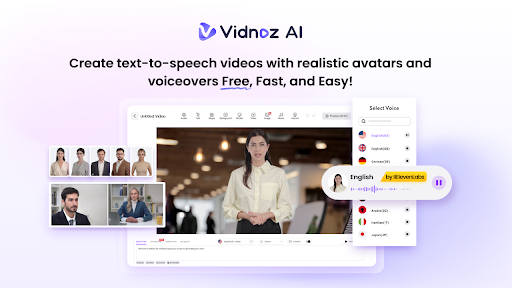
Video has become the dominant force in digital communication, reshaping how brands, creators, and businesses connect with their audiences. In an era where attention spans are shrinking and competition for visibility is intense, AI-powered video tools are transforming content creation by making it faster, smarter, and more accessible. AI video technology removes traditional barriers such as high production costs, technical expertise, and time constraints. Platforms like Vidnoz AI enable anyone to create professional, engaging videos with minimal effort. In this guide, we’ll give you a comprehensive overview of Vidnoz AI, helping you understand how this powerful tool streamlines the video creation process and makes producing high-quality videos effortless.
Part 1: What is Vidnoz AI?
Vidnoz AI is a web-based AI video creation platform that enables users to generate high-quality videos from a simple text prompt or any source material. It is certified with ISO/IEC 27001:2022 for Information Security Management. Offering over 1900 lifelike avatars, 2800 pre-designed video templates, and an extensive selection of 2000+ realistic AI voices across multiple languages and styles. With features like text-to-video, AI avatars, and brand customization, Vidnoz AI is ideal for marketing, e-learning, social media, training, and corporate communication — making video creation faster, scalable, and cost-effective. The standout feature of this program is that it offers an intuitive interface, which is best for non-tech and beginner users.
Part 2: Why Vidnoz AI Stands Out in AI Video Creation
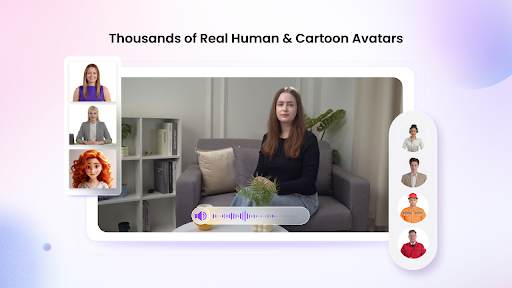
Vidnoz AI’s amazing features and capabilities make it one of the top tools for video creation. Here are the top features of this program:
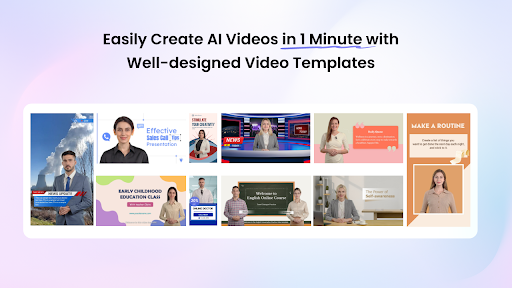
- Personalized Video Templates: Vidnoz AI offers over 2800+ AI video templates, allowing users to create various types of videos, including how-to guides, tutorials, product demos, marketing ads, social media reels, explainer videos, and educational content. Plus, each template in this program is fully customizable, giving users complete creative control over their videos.
- Lifelike AI Avatars: The program includes 1900+ realistic avatars, each with “Head Pose and Expression Control” features. The tool offers lifelike avatars of doctors, nurses, customer support, chiefs, teachers, and more. Further, users can do quick creations and generate a digital twin that can speak in over 40 languages using Avatar Lite, and Avatar Pro offers deeper customization features.
- Lip Sync AI Voices: It provides 2000+ natural-sounding AI voices in 140+ languages, each with unique accents and characteristics. All voices available on this program are powered by ElevenLabs, Microsoft, and Google. The lip-syncing AI voiceovers can perfectly match the text script with accurate lip movement, appropriate tones, and pitches, as well as gestures.
- Free Version: The standout feature of Vidnoz AI is that it also includes a free version, allowing users to create high-quality videos without spending a single penny. The free version of this tool includes 60 free credits, Avatar Lite, Text-to-Video, AI Voice Changer, Avatar Generator, and more.
- AI Video Wizard: With Vidnoz AI, users can generate professional-looking videos with a simple text prompt of any source material. AI Video Wizard makes the video creation process effortless and intuitive by automatically selecting suitable scenes, avatars, voiceovers, and visuals.
Part 3: Key Benefits and Drawbacks of Using Vidnoz AI
As mentioned earlier, Vidnoz AI provides a powerful and user-friendly approach to video creation, making it suitable for both beginners and professionals. However, the program also has some limitations. Here are the pros and cons of Vidnoz AI:
Benefits
- Vidnoz AI offers an intuitive and user-friendly interface, making it ideal for non-tech and beginner users. No professional help or editing experience required.
- Web-based tool, meaning no software downloading or installation is required. Users can access it from any device, including Android, iOS, Windows, and macOS.
- Easy AI Video Editor allows users to cut and trim footage, add animated effects, change backgrounds, and more.
- AI Image Generator enables users to create images in various styles, including realistic, flat, illustration, 3D cartoon, anime, and flat illustration.
Drawbacks
- Web-based tool, meaning it require stable and active internet connection to generate high-quality videos.
Part 4: How to Create Professional-Looking Videos With Vidnoz AI?
With this tool, users can generate high-quality and engaging videos with simple steps. Here is how to do it:
- Open your web browser and go to Vidnoz AI’s official site. Click on the “Create Video Now Free” button. Choose AI Avatar and Templates.
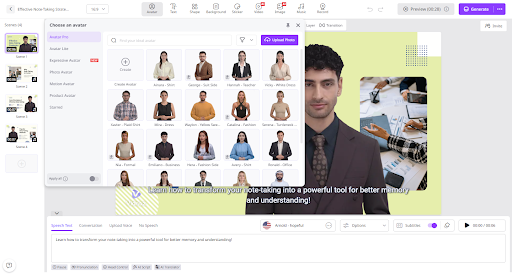
- Input your video prompt and select the AI voice. Users also have the option to choose the language of their video.
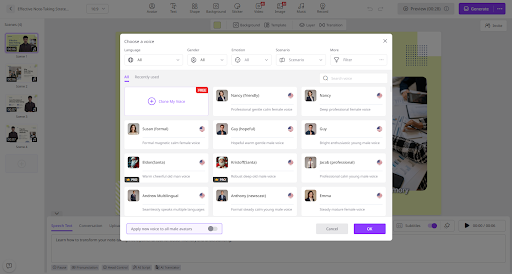
- Next, use the AI Video Editor to customize it according to your requirements. Users can change the background, add effects, and more.
- Finally, click on the “Generate” button to begin the video creation process. Within seconds, your video will be ready. Preview it and click on “Download” to import it in popular format.
Conclusion
Within just a few years, AI has completely transformed the video creation process, making it faster and more efficient. Vidnoz AI stands at the forefront of this revolution, empowering creators, marketers, educators, and businesses to produce professional-quality videos with minimal effort.

For startups, investing in custom software development can be a game-changer, enabling them to scale, innovate, and achieve their business goals more efficiently. However, getting it right is crucial. Building the right software from the beginning can lay the foundation for success, while poor choices can lead to unnecessary complications.
In this article, we will explore why custom software development is essential for startups,
Why Custom Software Development Matters for Startups
Startups are often navigating a competitive and dynamic landscape, where each business decision can have a significant impact on their growth and success. While off-the-shelf software may appear to be a cost-effective and quick solution, it frequently lacks the adaptability required to address the unique needs of startups.
- Solutions Tailored to Your Unique Needs
Custom software development, however, allows startups to create solutions that are directly aligned with their business operations, workflows, and objectives. This level of customization ensures that the software delivers exactly what is necessary for the business to function efficiently, providing a higher level of user satisfaction and significantly improving overall productivity.
- Scalability
Startups are inherently adaptable, and as they grow, so do their requirements. Whether it involves adding new features, processing larger volumes of data, or integrating with additional tools, custom software ensures the system can smoothly accommodate the changing needs without necessitating a complete redesign.
- Gaining a Competitive Edge
In the fast-moving business world, innovation plays a crucial role in staying ahead of the competition. Custom software provides startups with the flexibility to incorporate the latest technologies, craft unique user experiences, and develop systems that give them an edge over their competitors. By tailoring solutions specifically for their business, startups can stand out in the market, offering services or products that are difficult for competitors to replicate. This ability to innovate and differentiate helps startups gain a significant competitive advantage.
- Long-Term Cost Efficiency
With custom software, startups eliminate ongoing expenses such as licensing fees, subscription costs, or the constraints of generic software. Over time, custom solutions prove to be more cost-effective, particularly when the business avoids inefficient workarounds or the limitations that come with using off-the-shelf software.
- Enhanced Security
Custom software development allows businesses to implement security protocols that are specifically tailored to their needs, ensuring that critical data is kept secure and protected from potential breaches. Generic, off-the-shelf software may not meet the high-security standards required by startups, especially those in regulated industries. Custom solutions offer more control, reliability, and peace of mind in safeguarding vital data.
Key Factors to Consider When Choosing a Software Development Company
The success of your custom software development project is significantly influenced by the skills and experience of the software development company you select.
- Industry Expertise
They can provide tailored solutions that directly address your needs; offer valuable insights into industry best practices, and ensure compliance with relevant standards.
- Technical Expertise
Custom software development demands a high level of technical proficiency, including expertise in programming languages, frameworks, and development methodologies. It’s essential to ensure that the software development company you choose has the necessary technical skills to create a solution that aligns with your specific needs. Whether you’re developing a mobile application, a web platform, or an enterprise-level system, the company must be proficient in the relevant technology stack to meet your project requirements efficiently.
- Portfolio and Case Studies
A development company’s portfolio serves as a window into their past work and the caliber of projects they’ve completed. Pay attention to custom software solutions they’ve built for startups, focusing on the outcomes they’ve achieved and how they navigated challenges during the development process.
- Reputation and Client Reviews
A company with a strong reputation in the industry is likely to be trustworthy and committed to delivering high-quality solutions. Positive feedback from past clients is a good indicator that the company can be relied upon to meet deadlines, maintain transparency, and produce results that align with expectations.
- Development Process and Communication
They should be able to provide you with regular progress updates, promptly address concerns, and remain responsive to your feedback throughout the project. It’s also important to inquire about the project management tools and communication channels they use to ensure that these methods align with your preferred workflow.
- Post-Launch Support and Maintenance
Once the custom software is deployed, it will require ongoing support and maintenance to ensure it remains functional and up to date.
The Custom Software Development Process for Startups
Once you’ve selected the right software development company, it’s time to start the development process.
- Initial Consultation and Requirements Gathering
The first step in the process is a thorough consultation with the software development company. The development team will ask questions to clarify the features and functionality needed, and they will gather the necessary data to begin planning the project.
- Planning and Design
This will include wireframes, user interface (UI) designs, and a roadmap for development
Once all the requirements have been gathered, the software development company will move on to creating a detailed plan and design for the software. This phase includes developing wireframes, designing the user interface (UI), and outlining a development roadmap. Your input will help refine the software’s look and functionality, setting the stage for a more successful development phase.
- Development and Testing
Once the design is finalized and approved, the development team will begin the actual coding of the software. This phase involves writing the software’s code, integrating necessary systems, and implementing the features as outlined in the plan. Regular testing will occur throughout the development process to catch and address any bugs or issues early. This iterative testing ensures that the software meets the required standards and functions as intended, helping to reduce errors before the software is ready for deployment.
Conclusion
If you’re looking for top-tier software development companies in the USA, be sure to choose a partner with a proven track record of success, deep industry expertise, and a commitment to building scalable and secure software solutions that support your business’s long-term vision. With the right software, your startup can thrive in an increasingly digital world.
For more information on professional custom software development, visit Devsinc or check out our services page to learn how we can help you achieve your startup’s software goals.
The deployment phase involves moving the software to a live production environment. This could include hosting it on your servers or distributing it through app stores for mobile applications. The launch is a critical stage where the development team ensures that everything is set up correctly, guaranteeing a smooth transition from development to production. The team will monitor the deployment process carefully, making any necessary adjustments to ensure the software functions seamlessly for both your internal team and customers.
Once the software is live, the development team will continue to monitor its performance, addressing any initial hiccups that may arise. They will also ensure that the system is stable and ready for future updates or enhancements as your business grows.

As Qatar accelerates its digital transformation journey, businesses are increasingly adopting advanced ERP and CRM solutions like Microsoft Dynamics 365 to streamline operations, improve customer engagement, and drive data-driven decision-making. The future of microsoft dynamics 365 implementation in Qatar is being shaped by emerging technologies, evolving business needs, and strong government support for innovation.
In this article, we explore the key trends that will define the next phase of adoption and how organizations can stay ahead by partnering with a reliable azure partner in Qatar.
1. AI-Driven ERP and CRM Capabilities
One of the most significant trends shaping microsoft dynamics 365 implementation in Qatar is the integration of Artificial Intelligence (AI) into core business processes. Microsoft is heavily investing in AI-powered solutions such as Copilot, enabling businesses to automate repetitive tasks and gain actionable insights.
AI is no longer limited to experimental use cases. It is now embedded into ERP and CRM systems, transforming them into intelligent platforms capable of predictive analytics, automated workflows, and real-time decision-making.
For example, businesses in Qatar can leverage AI for:
- Automated financial reconciliation
- Demand forecasting and supply chain optimization
- Customer behavior analysis
This shift highlights the importance of working with an experienced azure partner in Qatar to implement AI securely and effectively.
2. Rise of Agentic AI and Automation
The future of microsoft dynamics 365 implementation in Qatar will be strongly influenced by “agentic AI” — intelligent systems capable of executing tasks autonomously. According to industry insights, AI agents will increasingly manage workflows, monitor systems, and make decisions with minimal human intervention.
Microsoft is already showcasing AI agents built on Azure that can:
- Analyze data in real time
- Provide recommendations
- Execute business processes automatically
This trend will significantly reduce manual workloads, increase efficiency, and allow organizations in Qatar to focus on strategic growth initiatives.
3. Cloud-First and Multi-Cloud Adoption
Cloud computing continues to be the backbone of microsoft dynamics 365 implementation in Qatar. Businesses are moving away from on-premise systems and embracing cloud-based solutions for scalability, flexibility, and cost efficiency.
Microsoft Dynamics 365 operates as a SaaS platform integrated with Microsoft Azure, enabling organizations to:
- Access data from anywhere
- Scale operations seamlessly
- Ensure business continuity
Additionally, multi-cloud strategies are becoming more common, allowing businesses to integrate various platforms while maintaining centralized control.
Choosing the right azure partner in Qatar is crucial for successful cloud migration and management.
4. Industry-Specific and Modular Implementations
Another emerging trend is the shift toward industry-specific and modular solutions. Instead of deploying a single large system, companies are adopting tailored modules that suit their unique needs.
For example:
- Retail businesses focus on customer experience modules
- Manufacturing companies prioritize supply chain and inventory
- Financial firms emphasize compliance and reporting
This modular approach reduces implementation time, lowers costs, and ensures better ROI for microsoft dynamics 365 implementation in Qatar.
5. Real-Time Data Integration and Analytics
Data is the foundation of modern business, and its importance will only grow in the future. Organizations are increasingly investing in real-time data integration to ensure accurate and timely decision-making.
Modern Dynamics 365 implementations enable:
- Seamless integration between CRM, ERP, and third-party systems
- Real-time dashboards and analytics
- Unified customer and operational data
This trend is critical because disconnected systems create inefficiencies and limit business insights. Companies in Qatar must focus on building strong data integration strategies to fully leverage Dynamics 365 capabilities.
6. Low-Code and No-Code Customization
Customization has always been a key aspect of microsoft dynamics 365 implementation in Qatar, but the approach is evolving. Low-code and no-code platforms are enabling businesses to customize applications without extensive technical expertise.
Using tools within the Microsoft ecosystem, organizations can:
- Build custom workflows
- Automate processes
- Develop applications quickly
This trend reduces dependency on developers and accelerates implementation timelines, making Dynamics 365 more accessible to businesses of all sizes.
7. Focus on Data Governance and Compliance
As digital transformation accelerates, data governance and compliance are becoming top priorities. Qatar’s regulatory landscape requires businesses to ensure data security, privacy, and transparency.
Future Dynamics 365 implementations will emphasize:
- Secure cloud environments
- Compliance with local and international regulations
- Transparent data usage policies
Strong governance frameworks are essential, especially as AI systems rely heavily on data accuracy and integrity.
Partnering with a trusted azure partner in Qatar helps organizations meet compliance requirements while maintaining operational efficiency.
8. Integration with IoT and Smart Technologies
Qatar’s vision for smart cities and digital infrastructure is driving the adoption of Internet of Things (IoT) technologies. Dynamics 365 is increasingly being integrated with IoT systems to provide real-time insights and automation.
For example:
- Smart inventory tracking in warehouses
- Predictive maintenance in manufacturing
- Energy management in smart buildings
This integration enhances operational efficiency and supports Qatar’s broader digital transformation goals.
9. Enhanced Customer Experience Through Personalization
Customer expectations are evolving rapidly, and businesses must deliver personalized experiences to remain competitive. Dynamics 365 enables organizations to create a unified view of customers and deliver tailored interactions.
With AI and data analytics, companies can:
- Predict customer needs
- Personalize marketing campaigns
- Improve customer service
This trend will play a major role in shaping microsoft dynamics 365 implementation in Qatar, especially in sectors like retail, hospitality, and finance.
10. Growing Role of Strategic Implementation Partners
As Dynamics 365 becomes more advanced, the role of implementation partners is becoming increasingly important. Businesses need expert guidance to navigate complexities, integrate systems, and maximize ROI.
An experienced azure partner in Qatar can:
- Provide end-to-end implementation support
- Ensure seamless integration with existing systems
- Offer ongoing maintenance and optimization
With the rapid evolution of technology, having the right partner is no longer optional—it is essential for success.
Top Companies for Microsoft Dynamics 365 Implementation in Qatar
1. Intwo
A globally recognized Microsoft partner providing end-to-end Dynamics 365 implementation, integration, migration, and support services. Known for delivering tailored enterprise solutions across multiple industries.
2. Synoptek
An award-winning Microsoft partner offering comprehensive Dynamics 365 ERP and CRM implementation services. They specialize in consulting, customization, and cloud transformation for businesses in Qatar.
3. Techcronus
Provides certified Dynamics 365 consultants with expertise in implementation, integration, automation, and AI-driven business solutions. Focuses on improving efficiency and ROI for organizations.
4. LITS Services
A Microsoft-certified partner specializing in Dynamics 365 Commerce implementation. Helps retail and enterprise businesses streamline operations and deliver personalized customer experiences.
5. Maison Consulting
Offers customized Microsoft Dynamics CRM implementation services designed to meet unique business requirements, ensuring smooth workflow and improved operational performance.
Conclusion
The future of microsoft dynamics 365 implementation in Qatar is driven by innovation, intelligence, and integration. From AI-powered automation and agentic systems to cloud adoption and real-time analytics, businesses must embrace these trends to stay competitive in a rapidly evolving market.
Qatar’s strong focus on digital transformation, combined with advancements in cloud and AI technologies, presents immense opportunities for organizations across industries. However, successful implementation requires careful planning, the right strategy, and collaboration with a trusted azure partner in Qatar.
By staying aligned with these emerging trends, businesses can unlock the full potential of Microsoft Dynamics 365 and position themselves for long-term growth in Qatar’s dynamic digital economy.

As organizations accelerate their digital transformation journeys, cloud migration has become a strategic priority rather than a technical upgrade. Businesses are moving away from legacy systems to embrace scalable, secure, and high-performance cloud environments. At the heart of this transformation are Azure migratie services, which provide the tools, frameworks, and expertise required to transition workloads seamlessly to Microsoft Azure.
In 2026, Azure migratie services are evolving rapidly, driven by advancements in automation, artificial intelligence, and hybrid cloud strategies. These trends are reshaping how organizations approach cloud migration, making the process faster, more efficient, and less risky.
Growing Demand for End-to-End Migration Solutions
One of the most prominent trends in Azure migratie services is the increasing demand for end-to-end solutions. Businesses no longer seek isolated migration tools but comprehensive services that cover assessment, planning, execution, and post-migration optimization.
Service providers now offer integrated platforms that analyze existing infrastructure, identify dependencies, and create detailed migration roadmaps. This holistic approach ensures that organizations can migrate their workloads without disruptions while maximizing the benefits of the cloud.
End-to-end solutions also include continuous monitoring and optimization, enabling businesses to maintain peak performance after migration.
Automation Driving Faster Migrations
Automation is transforming the migration process by reducing manual effort and minimizing errors. Azure migratie services leverage automation tools to handle repetitive tasks such as workload discovery, data transfer, and configuration.
Automated workflows ensure consistency and speed, allowing organizations to migrate large volumes of data and applications within shorter timeframes. This is particularly important for enterprises with complex IT environments.
Automation also reduces the risk of human error, ensuring a smoother and more reliable migration process.
Rise of Hybrid and Multi-Cloud Strategies
Hybrid and multi-cloud environments are becoming the norm as organizations seek flexibility and resilience. Azure migratie services are increasingly designed to support these strategies by enabling seamless integration between on-premises systems and cloud platforms.
Hybrid models allow businesses to retain sensitive data on-premises while leveraging the scalability of the cloud. Multi-cloud strategies provide additional flexibility by enabling organizations to use multiple cloud providers.
Azure migratie services facilitate these approaches by ensuring compatibility and interoperability across different environments.
Enhanced Data Migration with Azure Storage Mover
Data migration is one of the most critical aspects of cloud adoption, and advancements in tools like Azure Storage Mover are making this process more efficient. Azure Storage Mover enables secure and scalable data transfers from on-premises environments to Azure.
This tool simplifies large-scale data migration by automating transfer processes and ensuring data integrity. It supports various storage types and provides detailed tracking and reporting, allowing organizations to monitor progress in real time.
By leveraging Azure Storage Mover, businesses can accelerate migration timelines and reduce complexity.
Focus on Security and Compliance
Security remains a top concern for organizations migrating to the cloud. Azure migratie services are evolving to include advanced security measures that protect data and applications throughout the migration process.
Encryption, identity management, and threat detection are integrated into migration workflows to ensure that sensitive information remains secure. Service providers also implement compliance frameworks to meet regulatory requirements.
This focus on security and compliance helps build trust and ensures that organizations can migrate with confidence.
Integration of Artificial Intelligence and Analytics
Artificial intelligence and analytics are playing a significant role in shaping the future of Azure migratie services. AI-powered tools analyze existing systems, identify potential challenges, and recommend optimal migration strategies.
Predictive analytics help organizations anticipate performance issues and optimize resource allocation. These insights enable smarter decision-making and improve the overall efficiency of the migration process.
AI-driven automation also enhances accuracy and reduces the time required for complex migrations.
Cost Optimization and Resource Efficiency
Cost management is a critical consideration in cloud migration. Azure migratie services now include tools and strategies to optimize costs and ensure efficient resource utilization.
Service providers analyze usage patterns and recommend cost-saving measures such as right-sizing resources and eliminating unused assets. This ensures that organizations only pay for what they need.
Cost optimization not only reduces expenses but also improves return on investment, making cloud migration more financially viable.
Accelerating Application Modernization
Cloud migration is not just about moving workloads but also about modernizing applications. Azure migratie services support application modernization by enabling organizations to refactor, replatform, or rebuild applications for the cloud.
Modernized applications offer better performance, scalability, and user experience. They also enable organizations to leverage advanced cloud capabilities such as microservices and containerization.
This trend is driving innovation and helping businesses stay competitive in a rapidly changing market.
Seamless Integration with DevOps Practices
DevOps is becoming an integral part of cloud migration strategies. Azure migratie services support DevOps practices by providing tools for continuous integration and continuous deployment.
Automation and collaboration tools enable development and operations teams to work together more effectively. This accelerates the deployment of applications and ensures that updates are delivered quickly and efficiently.
Integration with DevOps practices enhances agility and supports continuous improvement.
Scalability and Future-Ready Infrastructure
Scalability is a key advantage of cloud computing, and Azure migratie services are designed to support future growth. Cloud-based infrastructure allows organizations to scale resources based on demand, ensuring optimal performance.
Scalable solutions enable businesses to handle increasing workloads without disruptions. This flexibility is essential for adapting to changing market conditions and customer demands.
Future-ready infrastructure ensures that organizations can continue to innovate and expand their operations.
Top Companies Providing Azure Migratie Services
Choosing the right service provider is essential for a successful migration. Here are some leading companies offering Azure migratie services:
InTWO
InTWO is a globally recognized provider of Azure migratie services, known for its expertise in cloud transformation and managed IT solutions. The company offers end-to-end migration services, including assessment, planning, execution, and post-migration support.
InTWO focuses on delivering tailored solutions that align with business objectives. Its team of experts ensures seamless migration with minimal downtime and maximum efficiency. With a strong emphasis on security, compliance, and performance optimization, InTWO helps organizations achieve successful cloud adoption and long-term scalability.
Accenture
Accenture is a leading global consulting firm that provides comprehensive Azure migratie services. The company specializes in cloud strategy, migration, and digital transformation.
Accenture leverages advanced tools and methodologies to deliver scalable and secure migration solutions. Its expertise in AI and analytics enhances the efficiency and effectiveness of migration projects.
Rackspace Technology
Rackspace Technology offers managed cloud services with a strong focus on Azure migrations. The company provides end-to-end support, including planning, execution, and optimization.
Rackspace is known for its proactive approach and 24/7 support, ensuring smooth and reliable migrations. Its services help businesses achieve high performance and operational efficiency.
Tata Consultancy Services
Tata Consultancy Services provides Azure migratie services designed to support large-scale enterprise transformations. The company offers comprehensive solutions, including cloud consulting, migration, and management.
TCS combines technical expertise with industry knowledge to deliver customized solutions. Its focus on automation and innovation ensures efficient and cost-effective migrations.
Wipro
Wipro is a global IT services provider offering Azure migratie services that emphasize scalability and efficiency. The company provides cloud migration, infrastructure management, and optimization solutions.
Wipro’s expertise in automation and analytics ensures seamless migrations and improved performance. Its services help organizations achieve digital transformation and long-term success.
Conclusion
Azure migratie services are playing a pivotal role in shaping the future of cloud migration. With advancements in automation, AI, security, and hybrid cloud strategies, these services are enabling organizations to transition to the cloud more efficiently and effectively.
From leveraging tools like Azure Storage Mover to optimizing costs and modernizing applications, the benefits are extensive. Businesses that adopt Azure migratie services can achieve greater agility, scalability, and innovation.
By partnering with leading providers like InTWO and others, organizations can ensure a successful migration journey and unlock the full potential of the cloud in 2026 and beyond.
-
 Technology8 months ago
China’s High-Speed Rail: A Transformational Journey Through Speed, Innovation, and National Progress
-

 Blog12 months ago
3 Amazing Multi-Purpose Phone Chargers You Need in 2026
-
 Business8 months ago
Top Reasons Stussy Clothing Dominates the Streetwear Scene
-
 Technology9 months ago
Frehf Explained: Understanding Its Impact on Modern Culture
-
 Blog9 months ago
AC Milan vs SSC Bari Timeline: Complete Match History and Key Moments
-
 Blog8 months ago
Unlocking the Mystery: What is Zosqk and Why It Matters
-
 Blog9 months ago
Lustmap24: Your Ultimate Guide to Adult Connections
-
 Blog9 months ago
Exploring Pantagonar: A Hidden Gem in the Heart of Nature